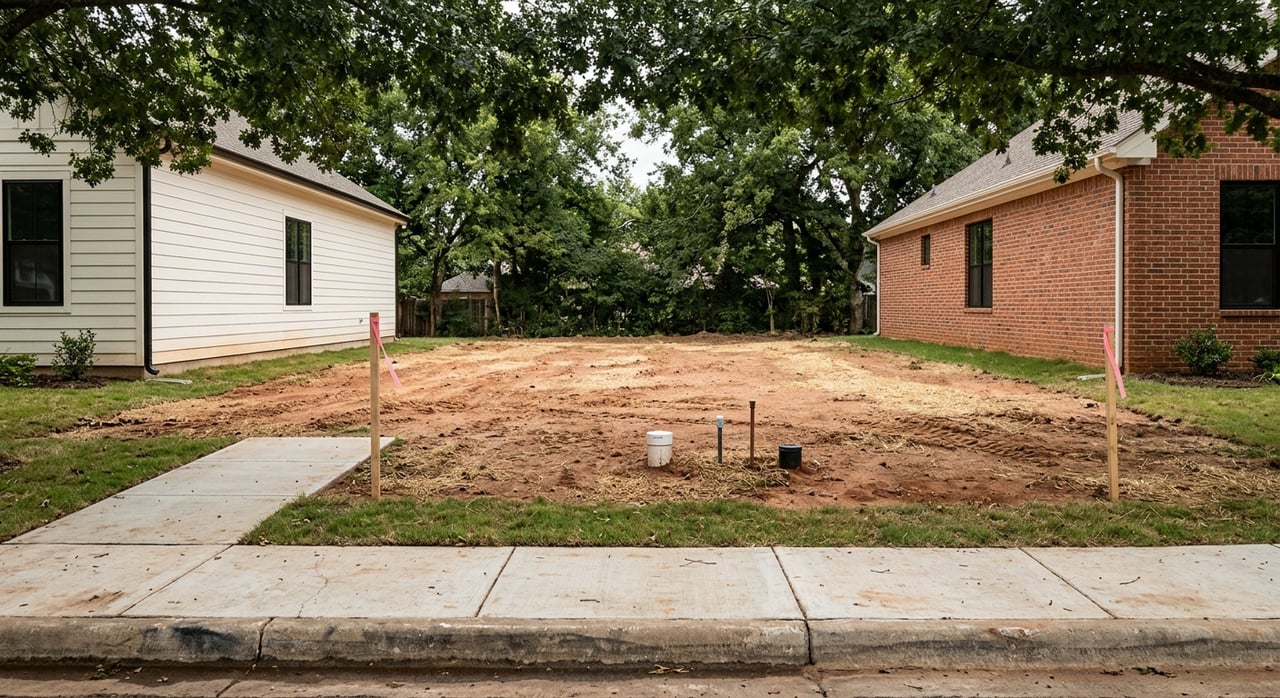
Looking at a vacant lot in Sullivan or elsewhere in Franklin County and thinking, “This could be a great small project”? You may be right, but infill and small development sites can look much easier on paper than they are in real life. If you are buying, building, or investing in 63090, you need to know how zoning, access, utilities, and local demand fit together before you commit. Let’s dive in.
Why infill matters in Sullivan
Sullivan sits in a different development pattern than much of Franklin County. The city had 6,906 residents in the 2020 Census and an estimated 6,942 residents in July 2025, while Franklin County grew from 104,682 to an estimated 108,090 over that same period. Sullivan is also much denser than the county overall, which makes infill and small-lot redevelopment more relevant inside town than across more spread-out county areas.
That density matters because small sites often work best where land is already divided, streets are established, and services are closer by. In a place like Sullivan, a single lot, a pair of lots, or an older corridor parcel may offer a more realistic path than trying to force a large-scale concept onto a small footprint. For many buyers and investors, the opportunity is not just finding land. It is finding land that actually fits the local pattern.
Start with city or county rules
One of the first questions to answer is whether the parcel is inside Sullivan city limits or in unincorporated Franklin County. That single detail can change your zoning path, utility expectations, and permitting process.
Inside Sullivan, you are working primarily from the city zoning code and city utility rules. In unincorporated Franklin County, you may face a different review path, especially for septic, floodplain issues, and planning approvals. If you skip this step early, you can waste time pricing a deal under the wrong assumptions.
Match the site to the zoning
Infill sites usually make the most sense when the zoning already supports the product you want to build. Sullivan’s code creates a fairly clear framework for this.
Sullivan residential districts
Sullivan’s residential districts run from R-1 through R-4. R-1 is intended for single-family medium-density development, R-2 allows single-family detached, two-family, and multi-family uses at medium densities, R-3 allows the same mix at higher densities, and R-4 is aimed at low-density detached residential development.
For a small builder or investor, that means you should not begin with a broad idea like “I’ll build whatever pencils.” Instead, begin with a narrower question: does this district already support the likely use? On a one-lot or two-lot site, that answer often determines whether the parcel is practical or speculative.
Sullivan commercial districts
Commercial zoning can matter for older in-town parcels and corridor locations. Sullivan’s code includes C-1 through C-5 districts, ranging from central business and neighborhood-scale commercial areas to highway-service uses.
Two categories stand out for smaller redevelopment conversations. C-2 can support neighborhood-scale commercial use and may allow renovation of former single-family residences for commercial purposes, while C-3 is intended as a transition zone where residential viability has weakened because of traffic or market conditions. For some older corridor sites, that can create adaptive reuse potential, but only if the district and site conditions line up.
PUDs are usually not a small-site tool
If you are evaluating a modest infill parcel, Sullivan’s planned unit development option usually will not be the answer. The city’s PUD framework requires at least 25 contiguous acres and is meant to combine traits from multiple zoning districts.
That makes PUDs more relevant for assembled tracts than for a single vacant lot in town. For most small projects, standard zoning districts will be the more realistic path.
Access matters more than visibility
A site that looks great from the road is not always easy to use. In Sullivan, that is especially true near Interstate 44 and major corridors.
The city defines I-44, Highway 185, Highway D, and service roads as controlled-access highways. That means owning frontage does not automatically give you unrestricted ingress and egress. A parcel can have strong visibility and still be difficult, costly, or slow to develop if legal access is limited.
This is one of the biggest traps in small-site underwriting. Buyers sometimes assume that visibility creates value by itself. In reality, access often drives value more directly than visibility does.
Check current traffic conditions
Transportation conditions can also shift over time. MoDOT has reported traffic impacts on Route 185 in Sullivan tied to corridor improvements, which is a reminder that current road work and traffic patterns can affect how a site functions.
If you are studying a corridor property, do not rely only on old traffic habits or what the parcel “used to be.” Verify what access and circulation look like now.
Utilities can make or break the deal
Many small development sites look affordable until utility costs and connection issues show up. That is why utility diligence should happen early, not after you negotiate the purchase.
In Sullivan, electric service is treated as a city-owned utility. The city’s water and sewer code also requires meters and permits, and in some cases sewer connection may be required when a public sewer is within 100 feet of the property line.
For subdivisions, the city also requires underground utilities where practicable and calls for utility-provider review when a subdivision is not already served by an existing power line. Even on a smaller site, those details can affect budget, layout, and timing.
Water service still needs parcel-level verification
The Missouri Department of Natural Resources issued a 2025 construction permit for the Sullivan Public Water System in Franklin County. That is a useful signal that public water service is part of the development picture in the area.
Still, you should not assume a specific parcel has easy or low-cost service just because city water exists nearby. Main locations, tap availability, and any capacity or extension needs should be confirmed at the property level.
Septic needs early review outside sewer areas
For parcels outside public sewer service, septic feasibility should be checked as soon as possible. Franklin County’s building department references its on-site sewage disposal systems ordinance and regulations with an adopted or amended date of September 23, 2025 and an effective date of October 1, 2025.
That means you should not treat septic as automatic on a county site. Soil conditions, setbacks, and county health or building requirements can all affect whether a parcel works the way you expect.
Floodplain review can affect timing
Floodplain issues do not always kill a deal, but they can change its cost and timing. Sullivan’s zoning code includes floodplain and floodway overlay districts, and Franklin County notes that development in the floodplain may require review by the county floodplain administrator and an outside contracted engineer.
For a small project, extra review can matter just as much as extra cost. If your timeline is tight, floodplain questions should be part of your earliest screening process.
Underwrite for local price sensitivity
A good site still needs a product the local market can absorb. In Franklin County, the housing numbers suggest that price sensitivity matters.
Franklin County’s median owner-occupied home value is $227,600, while Sullivan’s is $163,200. Median gross rent is $893 countywide and $919 in Sullivan, and owner-occupancy is lower in Sullivan than in the county overall. These figures do not guarantee what will sell or lease, but they do suggest that smaller, more attainable product types may be easier to place than high-end speculative product.
Think practical, not just possible
This is where disciplined underwriting matters most. A site may allow a certain use, but that does not always mean that use is the best fit for the local demand profile.
In and around Sullivan, many of the better small-site opportunities may be the ones that stay close to realistic local price points, straightforward layouts, and manageable utility solutions. The goal is not to build the biggest concept the site can hold. The goal is to build the product the market is most likely to absorb.
Expect a real entitlement timeline
If your project needs rezoning, a variance, or another approval, build in time. Franklin County’s planning and zoning department handles amendments to unified land-use regulations, conditional use permits, rezonings, variances, and related reviews.
The county states that rezonings require two public hearings and final county commission action, with notices sent to property owners within 600 feet. The planning office also notes staffing and workload constraints, so review times should be treated conservatively.
For buyers and investors, that means speed should not be assumed. If your numbers only work under a rushed approval schedule, the deal may not be as strong as it looks.
A simple checklist for evaluating small sites
Before you move forward on an infill or small development parcel in 63090, make sure you can answer these questions clearly:
- Is the site inside Sullivan city limits or in unincorporated Franklin County?
- What zoning district applies to the parcel?
- Does that district already support the product you want?
- Does the site have legal access, not just good visibility?
- Are water, sewer, and electric available at the property, or will extensions or approvals be needed?
- If sewer is not available, is septic likely to be feasible under current county rules?
- Is the parcel in a floodplain or floodway overlay area?
- Does the likely finished product fit local price points and demand?
- If approvals are needed, have you allowed enough time in your underwriting?
Why local guidance helps
The best small development deals are usually not the flashiest ones. They are the parcels where zoning, access, utilities, and likely demand line up before closing.
That takes more than a quick glance at a map. It takes local context, practical screening, and a realistic view of what the property can support in Sullivan and the surrounding Franklin County market. If you are weighing a lot, small infill site, or redevelopment opportunity, working with a brokerage that understands land, new construction, and investment property can help you avoid expensive surprises.
If you are evaluating a parcel in Sullivan or anywhere in Franklin County, HD Real Estate can help you look at the deal through a practical local lens.
FAQs
What should you check first on a small development site in Sullivan?
- Start by confirming whether the parcel is inside Sullivan city limits or in unincorporated Franklin County, because that affects zoning, utilities, and permitting.
What zoning districts matter most for infill housing in Sullivan?
- Sullivan’s residential districts R-1 through R-4 are the main starting point, with R-2 and R-3 allowing a broader mix that can include two-family and multi-family uses.
Why is access so important for Franklin County development sites?
- Access affects how usable a site really is, especially near I-44, Highway 185, Highway D, and service roads, where controlled-access rules can limit ingress and egress.
Do utility connections need to be verified on each Sullivan parcel?
- Yes, because city water, sewer, and electric may exist in the area without guaranteeing that a specific lot has simple, low-cost service.
When should you review septic feasibility in unincorporated Franklin County?
- Review it early, especially if public sewer is not available, since county on-site sewage rules and parcel conditions can affect whether the site is buildable.
Can floodplain issues delay a small project in Sullivan or Franklin County?
- Yes, because floodplain or floodway overlay review may add process steps and may require review by the county floodplain administrator and an outside contracted engineer.