Wondering what day-to-day life really feels like in St. Louis County’s suburban neighborhoods? If you are comparing areas, planning a move, or just trying to picture your routine, the answer is less about one single lifestyle and more about a steady, neighborhood-centered rhythm. From housing variety and yard-oriented streets to parks, errands, and commuting patterns, here’s what you can expect as you get to know suburban life in St. Louis County. Let’s dive in.
What suburban life feels like
St. Louis County is a large, established suburban county with an estimated 992,929 residents and 447,536 housing units in 2024. The area also shows a 69.0% owner-occupied rate, which helps explain why many neighborhoods feel settled rather than highly transient.
That sense of stability shows up in everyday routines. Census estimates say 88.0% of residents age 1 and older lived in the same house one year ago, which suggests many people are putting down roots and staying in place. For you, that can translate into neighborhoods that often feel consistent, familiar, and residential in character.
The county’s own planning materials also reflect how important neighborhoods are to daily life. Local guidance focuses on subdivisions, property maintenance, nuisance concerns, appearance, safety, and environmental issues, which reinforces that many residents experience the county through the lens of their immediate neighborhood.
Housing styles across the county
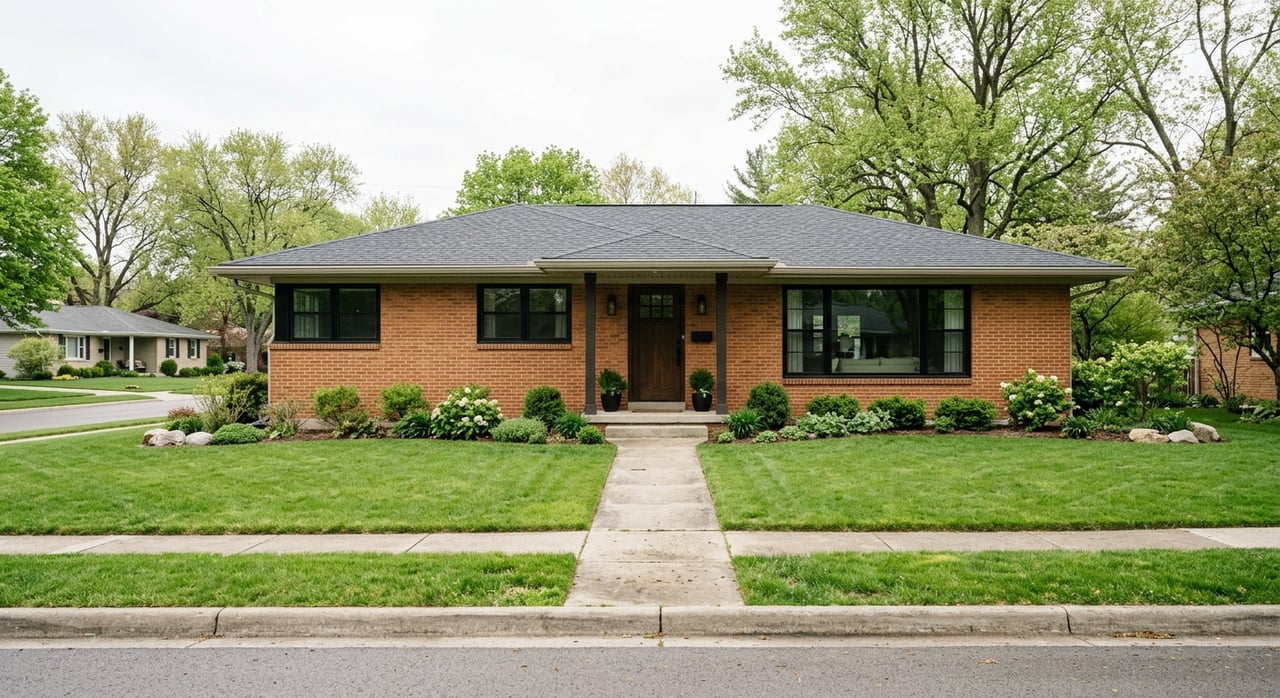
One of the most noticeable things about St. Louis County suburbs is that the housing stock is not one-note. Instead of a single style or era, you will find a mix of older homes, mid-century suburban houses, and later infill or subdivision development.
County historic records include residential properties dating from roughly 1885 through 1950 in places such as Maplewood and Spanish Lake. That helps explain why some areas have mature blocks with older architecture, while nearby streets may show later renovations or newer homes added over time.
In some older suburban pockets, brick and masonry construction is a visible part of the streetscape. Local landmark examples in Lemay also support that impression, which is why certain neighborhoods can feel especially rooted in traditional building materials and long-standing residential patterns.
Yards, lots, and neighborhood layout
If you are trying to picture the physical feel of suburban neighborhoods here, think yard-oriented and residential rather than acreage-based. That is the safest way to describe the county as a whole, because lot dimensions vary widely by subdivision, municipality, setback rules, and whether a street is public or private.
In practical terms, that means your experience may differ from one neighborhood to the next. Some subdivisions may have their own trustee approvals or restrictions, and private streets may be maintained by owners or subdivision trustees rather than a public agency.
This is an important part of everyday life because it shapes what neighborhood upkeep looks like. It can also affect how common areas, street maintenance, and appearance standards are handled where you live.
Parks and trails in your routine
Outdoor recreation is not just an occasional perk in St. Louis County. It is a real part of weekly life for many residents, thanks to the county’s large park system and regional trail network.
According to the county’s 2025 Parks and Recreation business plan, the department manages 68 parks across 11,400 acres. It also oversees 7 recreation complexes, 166 miles of trails, 65 athletic fields, 44 playgrounds, 78 picnic shelters, and 590 acres of lakes, along with more than 400 recreational programs each year.
That scale matters because it gives you options for everyday activities. A quick playground visit, a weekend picnic, a walk on a trail, or time at a recreation complex can fit into normal life without requiring a long special trip.
The broader regional trail system adds to that convenience. Great Rivers Greenway reports 140 miles of greenways and counting, and Grant’s Trail provides a continuous connection through south St. Louis County and parts of unincorporated county areas.
For many households, that supports routines like:
- Bike rides after work
- Stroller walks on weekends
- Dog walks on greenways
- Casual park meetups
- Outdoor exercise close to home
Errands and shopping patterns
When you live in St. Louis County’s suburbs, errands are usually organized around retail centers and major travel corridors. Rather than one countywide downtown core, daily shopping tends to happen through a network of regional and specialty retail areas.
That pattern is useful to understand if you are relocating from a place with a more centralized layout. In many parts of the county, convenience comes from having multiple practical destinations spread across the area instead of relying on one main commercial district.
For you, that can mean planning your routine around the routes you already drive. Grocery runs, dining, household shopping, and service appointments often fit into a broader corridor-based pattern that matches suburban living.
Commuting around the county
Commuting in St. Louis County is generally car-oriented, though there are transit options in key locations. The county’s mean commute time is 23.3 minutes, which gives a helpful baseline for what many residents experience.
MetroLink serves several suburban stations, including Brentwood I-64, Clayton, Maplewood-Manchester, Shrewsbury-Lansdowne I-44, University City-Big Bend, North Hanley, and Lambert. Metro also offers free Park-Ride lots, including long-term parking at Brentwood I-64 and Shrewsbury-Lansdowne I-44.
At the same time, the road network remains a major part of suburban life. MoDOT notes that the rebuilt I-64 project strengthened the connection between I-64 and I-170 and added a lane in each direction from Spoede Road to I-170, while additional work around I-44 and I-270 shows how closely many routines are tied to driving.
In everyday terms, that means you may have choices depending on where you live and work. Some households can mix driving and rail access, while others will rely more heavily on highways and arterial roads for commuting and errands.
Neighborhood upkeep and services
One of the less glamorous but very real parts of suburban life is how neighborhoods are maintained. In St. Louis County, that structure is fairly visible and often more organized than buyers first expect.
County guidance says public streets in unincorporated areas are maintained by the county or MoDOT. Private streets, on the other hand, are maintained by surrounding property owners or subdivision trustees.
Residential service expectations are also clearly defined. The county guidebook says one- and two-family residences must receive weekly trash pickup, weekly recycling, and twice-yearly bulky waste collection.
Property maintenance matters here as well. The same local guidance notes that residential ordinance issues, including property maintenance concerns, are enforced by county public works inspectors.
For you, this means neighborhood appearance and services are often part of the daily experience, not an afterthought. If you are comparing homes, it is worth paying attention not just to the house itself, but also to how the surrounding subdivision or street is managed.
What buyers should keep in mind
If you are considering a move into St. Louis County’s suburbs, the biggest takeaway is that no single neighborhood tells the whole story. The county is broad, established, and layered, so everyday life can feel a little different depending on the age of the housing, the type of subdivision, and your access to parks, retail corridors, and transit.
It helps to look beyond listing photos and ask practical questions about routine. Think about your commute, where you will run errands, whether you want trail access nearby, and how important subdivision structure or street maintenance is to you.
A neighborhood can look great online but feel very different once you picture your normal week there. The best move is to match the area not just to your budget, but to the way you actually live.
If you are exploring suburban neighborhoods in or around St. Louis and want practical guidance on what fits your day-to-day life, HD Real Estate is here to help with clear advice, responsive service, and local perspective.
FAQs
What is everyday life like in St. Louis County suburbs?
- Everyday life in St. Louis County suburbs is generally stable, neighborhood-centered, and car-oriented, with parks, trails, retail centers, and established residential areas shaping the weekly routine.
What types of homes are common in St. Louis County suburban neighborhoods?
- St. Louis County suburban neighborhoods include a mix of older brick or masonry homes, mid-century suburban houses, and later infill or subdivision development rather than one single housing style.
Are lot sizes similar across St. Louis County suburbs?
- No, lot sizes vary by subdivision, municipality, setback rules, and street type, so it is more accurate to think of many neighborhoods as yard-oriented and residential rather than uniform in lot size.
How important are parks and trails in St. Louis County suburban life?
- Parks and trails are a meaningful part of suburban life because the county manages 68 parks, 166 miles of trails, recreation complexes, playgrounds, lakes, and hundreds of recreational programs.
Is commuting in St. Louis County mostly by car?
- For many residents, yes. Commuting is generally car-oriented, although MetroLink serves several suburban stations and includes Park-Ride options in certain areas.
How is neighborhood upkeep handled in St. Louis County suburbs?
- Neighborhood upkeep depends on location, with public streets in unincorporated areas maintained by the county or MoDOT, private streets maintained by owners or trustees, and residential property maintenance issues enforced by county public works inspectors.