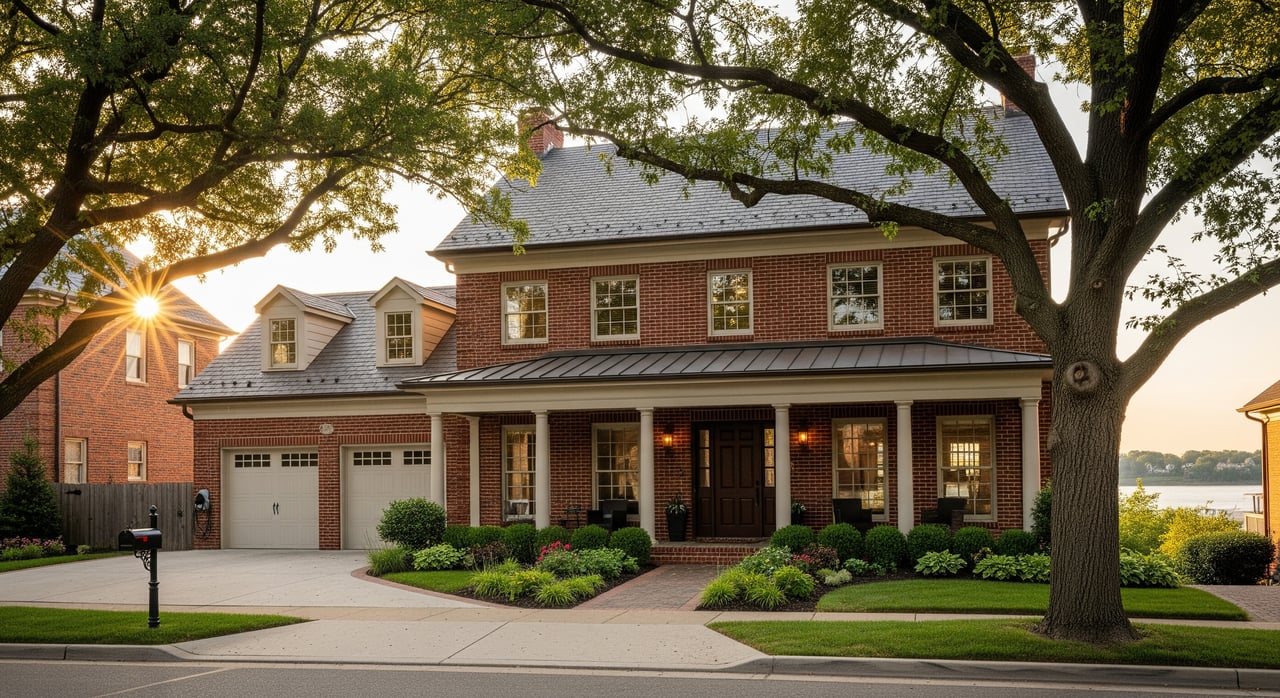
Looking for steady cash flow without taking on a large apartment building? Small multifamily in St. Louis County can be a practical entry point. You get multiple income streams under one roof, options to house-hack, and buildings that are common across older inner suburbs. The key is knowing how to comp rents, underwrite expenses, pick the right loan, and confirm local rules. This guide gives you a simple, local checklist you can use on your next duplex to fourplex. Let’s dive in.
Why small multifamily in St. Louis County
St. Louis County is a mature Midwest market with neighborhood-by-neighborhood differences. Inner-ring areas often have stronger rent demand and more 2–4 unit buildings, while outer-ring suburbs can offer lower entry prices. Investor interest is supported by local employment centers, universities, and medical hubs, along with a large stock of older properties that fit duplex-to-fourplex layouts.
Because the county includes many independent municipalities, you should confirm rent trends, taxes, and rental rules at the property’s exact address. A block can make a difference.
How to run rent comps
Define your subject units
Start with apples-to-apples comparisons. Match unit size and layout (for example, 2-bed 1-bath), building condition, parking, and utilities setup. Aim for comps within 0.5 to 1 mile. If inventory is thin, expand the radius and time window.
Note amenities that influence rents, such as in-unit laundry, updated kitchens and baths, off-street parking, and whether units are above grade.
Pull and normalize comps
- Gather recent listings and leased comps from the last 3 to 6 months.
- Normalize to a per-unit and per-bedroom basis.
- Track whether utilities are included and who pays water, sewer, and trash.
- Watch for concessions like one month free and note typical days to lease.
Use the HUD Fair Market Rents for the St. Louis area as a sanity check, not a target price. For deeper neighborhood context, review the American Community Survey for renter share and age of housing stock.
Build your rent schedule
Create a simple schedule that shows each unit’s current rent versus market rent. Then calculate Gross Scheduled Income (GSI) by adding projected rents plus reasonable other income like laundry, parking, or pet fees. Keep two versions: one for current rents and one for market rents.
Underwrite income and expenses
A simple pro forma
- Gross Scheduled Income (GSI) = total projected rents + other income.
- Less Vacancy and Credit Loss = reserve of 5% to 10% of GSI.
- Effective Gross Income (EGI) = GSI − vacancy reserve.
- Operating Expenses (OE) = taxes, insurance, owner-paid utilities, repairs, management, admin.
- Net Operating Income (NOI) = EGI − OE.
- Debt Service = total annual loan payments.
- Cash Flow Before Taxes = NOI − Debt Service.
- Cap Rate = NOI ÷ Purchase Price.
- Gross Rent Multiplier (GRM) = Purchase Price ÷ GSI.
Local assumptions to test
- Vacancy and collection loss: 5% to 10%, based on submarket demand.
- Operating expense ratio: 35% to 50% of EGI. Use 40% to 50% to be conservative for older buildings or owner-paid utilities.
- Management: 8% to 12% of collected rent for professional management. If self-managing, include the value of your time when judging returns.
- Maintenance and repairs: budget $300 to $1,000+ per unit per year, higher for older properties.
- Capital reserves: set aside $250 to $1,000 per unit per year. A common conservative target is about $500 per unit for older buildings.
- Insurance: get local quotes. Costs vary with age, size, and liability exposure.
- Property taxes: pull the current bill from the St. Louis County Assessor and Collector of Revenue. Do not estimate with a rule of thumb.
- Utilities: underwrite with historic bills or neighborhood averages for owner-paid water, sewer, and trash.
- DSCR: many lenders look for 1.20 to 1.25. Underwrite to at least 1.25 using market rents.
Valuation quick screens
Use cap rate and GRM to compare options. Cap rates vary widely by neighborhood and condition. Rely on recent small-multifamily sales in the immediate area and cross-check with a local broker’s read on current cap ranges.
Financing 2–4 unit properties
Owner-occupant options
If you plan to live in one unit, you may qualify for residential financing.
- FHA 1–4 unit mortgages allow low down payments for owner-occupants, typically around 3.5% with qualifying credit. Properties must meet FHA standards. Check current FHA loan limits for St. Louis County before you shop.
- Conventional loans through Fannie Mae and Freddie Mac also finance owner-occupied 2–4 units. Down payments and reserve requirements vary by product and borrower profile.
Investor and DSCR loans
Non-owner-occupied loans usually require higher down payments and are priced differently. Local banks and credit unions often offer portfolio loans that look closely at property cash flow and may underwrite to a DSCR target. DSCR products can be useful if you prefer limited personal income documentation, as approval is based on the building’s rents and expenses.
Hard-money and bridge financing can help with heavy rehabs or quick closings, but rates are higher and terms shorter. Always plan the exit.
Lender selection tips
- Get pre-approved for your exact property type, including whether you will occupy a unit.
- Ask for scenarios that use current rents and a stress case with 5% to 10% lower rents or higher vacancy.
- Confirm required reserves post-closing. Some programs ask for 6 to 12 months of PITI or a per-unit reserve.
Property management and rules in St. Louis County
Screening and leases
Use written leases that align with Missouri law and any municipal ordinances. Clarify utilities, maintenance, entry, and late fees. Screening best practices include verifiable income, credit and background checks, landlord references, and documented employment verification. For legal guidance, consult the Missouri Attorney General’s landlord-tenant resources.
Municipal checks to complete
Regulation is often municipal in St. Louis County. Before you close:
- Confirm zoning and allowed unit count with the St. Louis County Department of Planning or the city planning office if the property is within an incorporated municipality.
- Check for rental registration and inspection programs. Many municipalities require registration and periodic inspections.
- Verify the building’s configuration is legal and compliant with current code.
- For pre-1978 buildings, follow federal lead-based paint rules and disclosures.
- Understand local court procedures if an eviction becomes necessary.
If you plan to accept vouchers or want to understand voucher demand in your area, review the Housing Choice Voucher program details from the Housing Authority of St. Louis County.
Maintenance and vendor planning
A proactive maintenance plan keeps occupancy strong. Schedule preventive checks, set response standards, and onboard tenants with clear expectations. Vet HVAC, plumbing, electrical, roofing, and general contractors so you can move fast on repairs and turns. Whether you self-manage or hire a professional, consistent systems protect NOI.
Risk checks and neighborhood due diligence
Stress tests that protect your yield
- Model vacancy at two times your baseline and rents 5% to 10% lower to see how cash flow holds up.
- Budget for near-term capital needs like roof, plumbing, or electrical updates on older buildings.
- Review property tax history and anticipate reassessment risk by pulling prior-year bills.
- Keep an eye on potential municipal code changes that may add registration or compliance costs.
- If you use short-term or interest-only financing, plan for a payment reset and have multiple exit options.
Neighborhood signals
- Review crime trends from local police resources and community reports.
- For renter households with children, school district reputation can influence demand and lease stability. Keep descriptions neutral and use data-based sources.
- Confirm walkability, transit access, and proximity to major employers such as hospitals and universities.
- Study recent 2–4 unit sales and days on market to understand liquidity.
A quick pre-offer checklist
- Pull leases, rent rolls, and proof of rent payments if the property is tenant-occupied.
- Obtain utility histories and the last 2 to 3 years of tax bills from the county.
- Order an inspection with a focus on multi-unit systems: roof, electrical panels, plumbing stacks, HVAC, foundation, and moisture.
- Confirm zoning, occupancy limits, and rental registration needs for the exact municipality.
- Build two pro formas: current rents and market rents with a conservative vacancy reserve.
- Price financing options with at least two lenders, including a local portfolio lender and a program lender for FHA or DSCR.
- Verify insurance availability and quotes early.
- Review comparable 2–4 unit sales, and confirm your cap rate and GRM with a local broker.
Your next steps
If you take nothing else from this guide, take this three-step plan:
- Collect 3 to 6 true rent comps within 1 mile and compare them to HUD Fair Market Rents as a check. 2) Build a simple pro forma with a 5% to 10% vacancy reserve and a conservative expense ratio. 3) Get quotes from two lenders that show current-rent and stress-test scenarios.
Ready to evaluate a specific duplex, triplex, or fourplex in St. Louis County? Our team helps you pull the right comps, confirm municipal requirements, and structure offers that pencil. Connect with HD Real Estate to start your analysis and see live opportunities.
FAQs
What makes 2–4 unit investing in St. Louis County attractive?
- You get multiple income streams, flexible financing if you house-hack, and a deep inventory of older small multifamily in inner suburbs, with demand supported by local employment centers.
How do I estimate market rent for a duplex near universities or hospitals?
- Pull 3 to 6 nearby comps from the last 3 to 6 months, adjust for unit size and amenities, note concessions, and compare your estimates to HUD Fair Market Rents as a baseline check.
What down payment is typical if I live in one unit of a fourplex?
- FHA often allows around 3.5% down for qualifying owner-occupants of 1–4 unit properties, subject to property standards and county loan limits. Confirm exact terms with your lender.
Do I need a rental license in St. Louis County municipalities?
- Many municipalities require registration and periodic inspections. Confirm requirements with the St. Louis County Department of Planning or the specific city where the property sits.
How should I treat vouchers in my underwriting?
- If you plan to participate, review the Housing Choice Voucher program with the Housing Authority of St. Louis County and underwrite to program rent levels, inspection timelines, and payment schedules.