What if your neighbors helped pay your mortgage? In St. Louis County, house hacking a duplex or fourplex can lower your housing costs while you build equity and landlord experience. You might be weighing loan options, wondering what each unit could rent for, or trying to understand local rules. This guide walks you through financing, realistic rent benchmarks, landlord responsibilities, municipal inspections, and a simple way to underwrite a deal. Let’s dive in.
What house hacking means
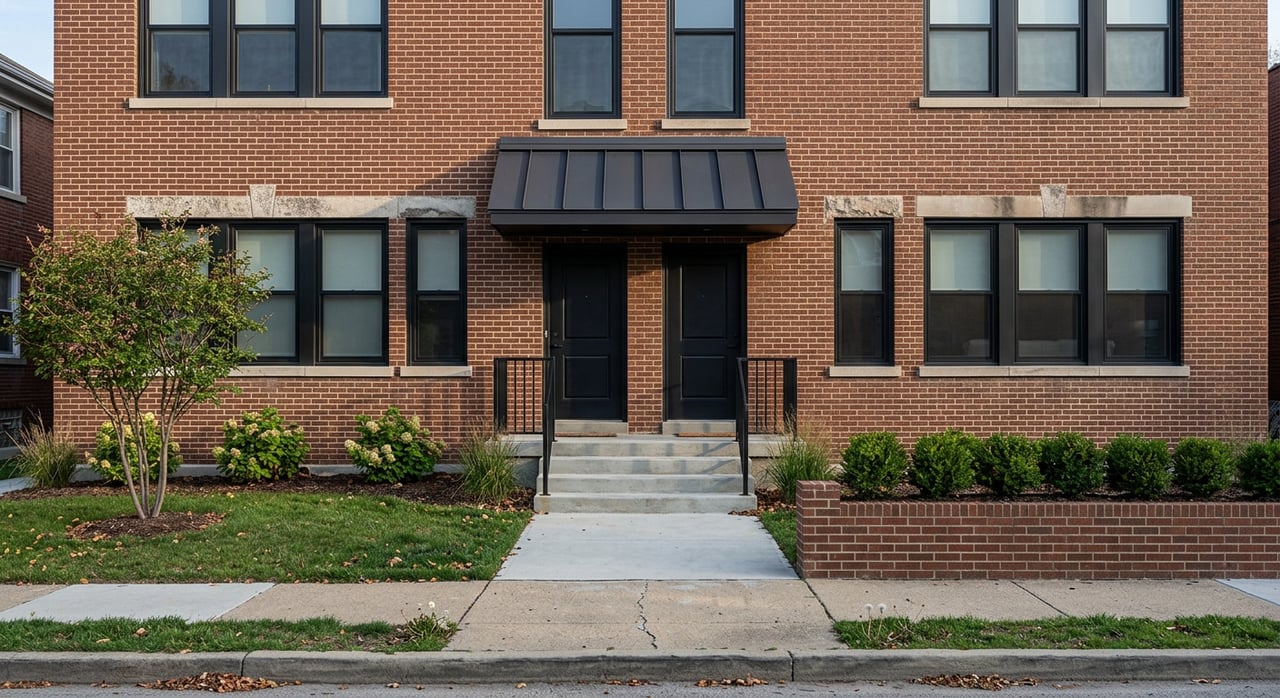
House hacking means you live in one unit of a 2 to 4 unit property and rent the others. Your tenants’ rent helps cover your mortgage and operating costs. The upside is favorable owner‑occupant loans and the ability to use projected rental income in underwriting. The risks are vacancy, repairs, code compliance, and meeting lender occupancy rules. You reduce risk by underwriting conservatively and verifying local licensing and inspection steps before you write an offer.
Financing 2 to 4 units
Owner‑occupant financing is what makes house hacking work. Three paths are common in St. Louis County: FHA, conventional, and VA. Each program has its own rules for down payment, reserves, and how rental income is counted.
FHA for low down and rehab
FHA insures 1 to 4 unit owner‑occupied properties. You must plan to live in the property as your primary residence, and occupancy timing is set in FHA guidance. You can review the owner‑occupancy framework in the HUD Single‑Family Handbook for clarity on expectations and timing requirements. See the handbook overview at the HUD partner site to understand how occupancy is documented and verified (HUD Single‑Family Handbook).
FHA also publishes county‑level mortgage limits for one to four units. These limits cap the maximum FHA‑insurable loan for a duplex or fourplex in St. Louis County, so it is smart to check current limits before you shop (FHA program and limits overview).
If you plan to improve or repair units while you live on site, FHA’s 203(k) rehab mortgage allows you to roll qualified renovations into one loan. This is a common route for house hackers who buy older duplexes and upgrade them for better long‑term rents. Work only with lenders familiar with 203(k) rules and scope control (FHA 203(k) basics).
Conventional options that rival FHA
Conventional loans that conform to Fannie Mae and Freddie Mac guidelines now allow lower borrower contributions on many 2 to 4 unit owner‑occupied purchases. Fannie Mae’s selling guide reflects minimum borrower contribution rules that can be competitive with FHA for well‑qualified buyers. Lenders may layer on additional requirements like higher credit score thresholds or months of reserves, so confirm details early (Fannie Mae selling guide reference).
VA for eligible buyers
If you are a veteran or qualifying service member with available entitlement, VA‑backed loans can be a powerful path for 1 to 4 unit owner‑occupied purchases. Many buyers can purchase with no down payment. VA loans also have occupancy requirements, property standards, and lender overlays to consider (VA home loans overview).
Underwriting and reserves
Across programs, expect the lender to verify that you will occupy one unit. Many conventional underwriters will require post‑closing reserves, often several months of your full mortgage payment (PITI) for 2 to 4 unit properties. Lenders may allow projected rent from other units to count toward your income, but the documentation standard varies by program and appraisal findings. Build a cushion in your plan and get a written pre‑approval that specifies down payment, reserves, and how rental income will be treated.
St. Louis County rents to expect
Start with county‑level benchmarks, then pull zip‑code comps by unit type. U.S. Census QuickFacts places St. Louis County’s median gross rent near 1,209 dollars, which is a helpful macro check when you sanity‑test projected rents (St. Louis County QuickFacts). Listing data snapshots show a similar picture. RentCafe reported an average rent for the county in the low 1,200s during a recent review period, consistent with Census trends (current listings snapshot).
Conservative rent underwriting
When you underwrite a duplex or fourplex, build comps by unit size. A one‑bed unit in an inner‑ring suburb may support something like 1,000 to 1,400 dollars. A two‑bed may land closer to 1,300 to 1,700 dollars. Pull fresh comps in the exact zip code, then reduce them by 5 to 10 percent for conservatism. Apply a vacancy factor of around 5 to 8 percent to estimate effective income. These ranges are county‑level starting points, not a substitute for current neighborhood comps.
Landlord rules in Missouri
Owning a small multifamily means you take on specific legal duties. Before you advertise for tenants, review these statewide items and check your property’s city code.
Security deposits and returns
Missouri law caps security deposits and requires landlords to return the deposit or an itemized statement within a defined period. Penalties can apply for wrongful withholding. For statutory language and timing details, review the Missouri security deposit reference at the state site (Missouri deposit statute reference).
Lead‑based paint for older buildings
If the property was built before 1978, you must provide federal lead‑based paint disclosures to tenants and buyers. Most MLS listings for older buildings flag this requirement. Plan for testing or abatement if you are doing rehab work that disturbs painted surfaces.
Eviction process basics
Eviction procedures follow Missouri statutes and local court rules. Notice windows, court timing, and enforcement can vary by county and caseload. The safest assumption is to plan for several weeks of process if you ever need to remove a tenant. Build that risk into your cash reserves and screening process.
City licensing and inspections
St. Louis County is a patchwork of municipalities, and many run their own rental registration, licensing, and inspection programs. Before you write an offer, look up the address on the city’s building or inspections portal and confirm what is required for multi‑unit buildings. As an example, University City publishes its rental and inspections code online, which shows how rules can vary by city (University City code portal).
Plan to include a municipal inspection or code‑compliance contingency in your offer if the city requires a certificate of occupancy or rental license before you move in or lease units.
Where house hacking can work
House hacking often works best near employment, education, and transit corridors, and in inner‑ring suburbs with older small‑multifamily stock. In St. Louis County, representative municipalities to watch include University City, Clayton, Webster Groves, Kirkwood, Maplewood, and Richmond Heights. Purchase price per unit, condition, and proximity to services can vary block by block. Evaluate each property on its merits using current comps and the city’s licensing steps.
Evaluate a deal step by step
Use this repeatable checklist to go from a listing to a decision.
- Property search and first pass
- Filter for 2 to 4 units in your target zip codes. Note unit count, bedroom mix, current rents, and any updates mentioned.
- Pull public records
- County assessor: taxes, assessed value, owner, parcel ID.
- Recorder: easements or encumbrances.
- City code: rental registration and inspection rules for the exact address.
- Build rent comps
- Use current listings and recent rentals to estimate market rent by bedroom count and immediate submarket. Cross‑check sources, then haircut by 5 to 10 percent.
- Run conservative numbers
- Gross Scheduled Income equals the sum of market rents for each unit.
- Vacancy 5 to 8 percent gives you Effective Gross Income.
- Operating expenses: taxes (actual), insurance (get a quote), repairs and maintenance 5 to 10 percent of collected rent, property management 8 to 10 percent if you will not self‑manage, utilities you pay, HOA if any, plus a capital expenditure reserve.
- Net Operating Income equals Effective Gross Income minus Operating Expenses.
- Cap Rate equals NOI divided by price. GRM equals price divided by annual gross rent.
- Cash‑on‑Cash equals annual pre‑tax cash flow divided by total cash invested.
- Financing check
- Get written pre‑approval for FHA, conventional, or VA that states down payment, whether projected rents can count, reserve months, and required credit scores. Confirm whether the lender needs an appraiser’s rent schedule.
- Inspection and code risk
- Order inspections and verify city licensing. For pre‑1978 buildings, prepare for lead‑safe work.
- Profitability test example
- Illustrative inputs (method only): Price 300,000 dollars. Rents 2,000 and 1,200 per month equals 38,400 per year. Vacancy at 6 percent gives 36,096 effective income. Expenses of 12,000 yield NOI of 24,096. Cap rate equals 24,096 divided by 300,000, which is 8.0 percent. Compute debt service from your loan quote to finish cash‑on‑cash.
Before you write an offer
Use this quick checklist to reduce surprises.
- Get a program‑specific pre‑approval for FHA, conventional, or VA with written reserve and rental income terms.
- Pull the county assessor record, tax history, and the city’s rental licensing and inspection rules for the address.
- Save rent comp screenshots by unit type and submarket.
- Add inspection and municipal licensing contingencies to your offer if required by the city.
- Verify you have cash to cover down payment, closing costs, initial repairs, and at least 60 to 90 days of PITI and basic operating reserves.
- Draft a plan for tenant placement, lease terms, and turnover costs.
What lenders verify
Expect your lender to verify three things up front. First, owner occupancy if you are using FHA or VA, which is documented and time bound under program rules (HUD owner‑occupancy framework; VA overview). Second, reserves for 2 to 4 units, which are commonly several months of PITI on conventional loans and can be influenced by lender overlays. Third, rental income treatment, which often relies on an appraiser’s rent schedule and the program’s documentation standard (Fannie Mae selling guide reference).
Common mistakes to avoid
- Assuming top‑of‑market rents without a haircut. Underwrite conservatively and verify with current comps.
- Ignoring city licensing. Confirm rental registration, inspections, and certificates of occupancy before you go under contract.
- Forgetting capital expenditures. Set aside a reserve for roofs, systems, and big turns.
- Skipping written pre‑approval. Program rules vary. Get your lender to commit in writing to down payment, reserves, and how rents are treated.
Ready to start?
If you want a practical path to lower housing costs and long‑term wealth, house hacking a duplex or fourplex in St. Louis County can work with the right plan. Lock in your financing strategy, underwrite conservatively, and confirm city requirements before you commit. If you would like help finding and evaluating 2 to 4 unit opportunities that fit your goals, connect with the team at HD Real Estate. We combine local knowledge with investor‑minded analysis so you can move with confidence.
FAQs
What is house hacking a duplex in St. Louis County?
- It means you live in one unit of a 2 to 4 unit property and rent the others to offset your mortgage and build equity.
Which loans let me buy a 2 to 4 unit and live in one?
- FHA, conventional conforming loans, and VA (for eligible buyers) all allow owner‑occupied 2 to 4 unit purchases with program‑specific down payment and occupancy rules.
How much rent can I expect per unit in St. Louis County?
- County benchmarks place median gross rent near 1,209 dollars, with recent listing averages in the low 1,200s; per‑unit rents vary by size and location, so pull current comps for your exact zip code.
Do I need a rental license for a duplex in St. Louis County cities?
- Many municipalities require rental registration or a certificate of occupancy; check the specific city’s code for your address and include any required inspection contingencies in your offer.
What reserves do lenders typically require for 2 to 4 units?
- Conventional loans often require several months of post‑closing PITI, and lender overlays vary, so confirm required months of reserves in your written pre‑approval.
How do Missouri security deposits work for landlords?
- State law caps deposits and requires a timely return or itemized statement after move‑out; review the statute and keep detailed records of condition and any deductions.
What is a simple way to evaluate a house hack deal?
- Build a rent comp matrix, haircut by 5 to 10 percent, apply 5 to 8 percent vacancy, estimate expenses conservatively, then compute NOI, cap rate, and cash‑on‑cash using your lender’s actual loan quote.